
A Guide from Ergono3D — Healthcare MCP Platform
Ergono3D turns your foot feedback into better insoles—ones you can design and print at home in a few clicks.
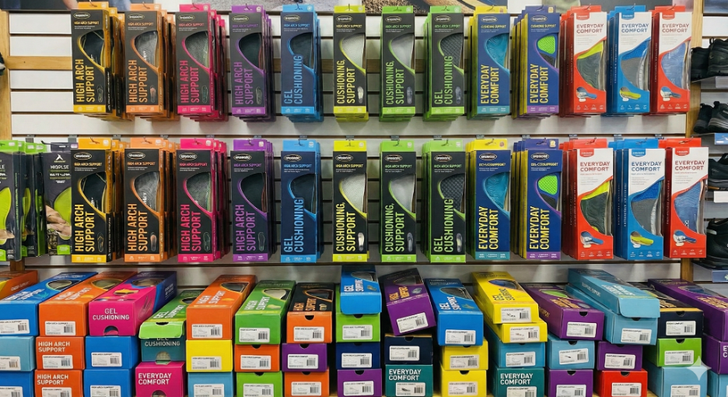
The One-Size-Fits-Most Problem
:format(webp)/https://fbi.cults3d.com/uploads/blog/image/image/3067/The_One-Size-Fits-Most_Problem_Print_Your_Own_Custom_Insoles_at_Home.jpg) 3D printing world, most files are frozen. You download an STL, print it, and that’s it. Your experience—good or bad—doesn’t improve the next version. It just dies with that one print.
3D printing world, most files are frozen. You download an STL, print it, and that’s it. Your experience—good or bad—doesn’t improve the next version. It just dies with that one print.Insoles make this especially painful. The feedback is so specific, so immediate. And it goes nowhere.
The $300 Problem
Custom orthotics from a professional aren’t expensive because of materials. They’re expensive because someone has to assess your feet, make a mold, fit it, adjust it, fit it again.
That process runs about $300 in most places. And you get one pair, for one shoe.
We thought: what if you could skip all that and just print one at home for $20? Iterate until it actually fits your foot, not the average foot.
That’s Ergono3D.
What Ergono3D Actually Does
We turn your comfort feedback into better insoles—ones you can print at home in a few clicks.
How It Works (No Tech Knowledge Needed)
The heavy lifting happens behind the scenes.
We spent a lot of time encoding what orthotics experts actually do: when to prioritize lateral stability, how deep to make the heel cup, where arch support should start and stop, how to zone firmness across the insole, how to transition thickness so it doesn’t create hot spots.
:format(webp)/https://fbi.cults3d.com/uploads/blog/image/image/3068/How_It_Works__No_Tech_Knowledge_Needed__Print_Your_Own_Custom_Insoles_at_Home.jpg)
:format(webp)/https://fbi.cults3d.com/uploads/blog/image/image/3069/System_The_One-Size-Fits-Most_Problem_Print_Your_Own_Custom_Insoles_at_Home.jpg) Ergono3D doesn’t just nudge one slider. It reconsiders the heel cup, arch zone, stiffness distribution, thickness, and transitions together—and generates a new version that addresses the whole picture.
Ergono3D doesn’t just nudge one slider. It reconsiders the heel cup, arch zone, stiffness distribution, thickness, and transitions together—and generates a new version that addresses the whole picture.This is what MCP enables: a feedback loop where your sense input drives real parametric changes in a 3D model, without you needing to understand CAD or biomechanics.
Why MCP Matters Here
MCP gets AI out of the chat box and into actual tools. As seen with Manus and other projects, instead of just talking about what you need, the AI can do something—connect to a modeling system, generate a file, and hand it back to you.
For healthcare and 3D fabrication, this is a big deal:
- Health workflows have always struggled with data stuck in one system and tools in another.
- 3D workflows have decisions in your head and geometry locked in software.
MCP bridges that gap. Need → generate → test → iterate. A real loop.
We’re betting that AI calling specialized tools through a standard protocol will reshape how custom products get made. The signals are clear: OpenAI’s ChatGPT Health connects users to their medical records; Anthropic’s Claude for Life Sciences links researchers to lab tools like Benchling; Meta’s SAM 3D Body generates 3D human meshes from single photos. Foundation models that interpret physical geometry, plus AI that calls real tools—that’s not a research demo anymore. That’s infrastructure.
We want Ergono3D to be one of the first in Healthcare MCP and 3D world.
Two Scenarios That Actually Make Sense
Flat Feet: More Complicated Than “Add Arch Support”
:format(webp)/https://fbi.cults3d.com/uploads/blog/image/image/3070/Flat_Feet_More_Complicated_Than_Add_Arch_Support__Print_Your_Own_Custom_Insoles_at_Home.jpg) Ergono3D treats it as a tuning problem. Adjust the support zone, the transition, the position—not just the height. Wear it. If something’s still off, tweak and reprint. You’re looking for that sweet spot where it supports without pushing back.
Ergono3D treats it as a tuning problem. Adjust the support zone, the transition, the position—not just the height. Wear it. If something’s still off, tweak and reprint. You’re looking for that sweet spot where it supports without pushing back.Our Moderate Flat Feet Support insole models are available to download on Cults3D: Flat Feet Collection
Court Sports: You Need Lockdown, Not Cushion
:format(webp)/https://fbi.cults3d.com/uploads/blog/image/image/3071/Court_Sports_You_Need_Lockdown__Not_Cushion_Print_Your_Own_Custom_Insoles_at_Home.jpg)
:format(webp)/https://fbi.cults3d.com/uploads/blog/image/image/3072/Who_This_Is_For_3d_print_Print_Your_Own_Custom_Insoles_at_Home.jpg) Ergono3D Models
Ergono3D Models
:format(webp)/https://fbi.cults3d.com/uploads/blog/image/image/3073/Getting_Started_Temps_parameters_Print_Your_Own_Custom_Insoles_at_Home.jpg) Ergono3D collection on Cults3D, or visit us for the full system: Ergono3D
Ergono3D collection on Cults3D, or visit us for the full system: Ergono3D
Recent Comments